

Truth is a Synthesis
Both/And; Either/Or - Part II

A few months ago, I inaugurated a series on the relationship between the both/and and the either/or. This installment will take a closer look at the both/and. After an interlude, the next will look at the either/or. From there, we will be in a position to think about how they could complement one another.
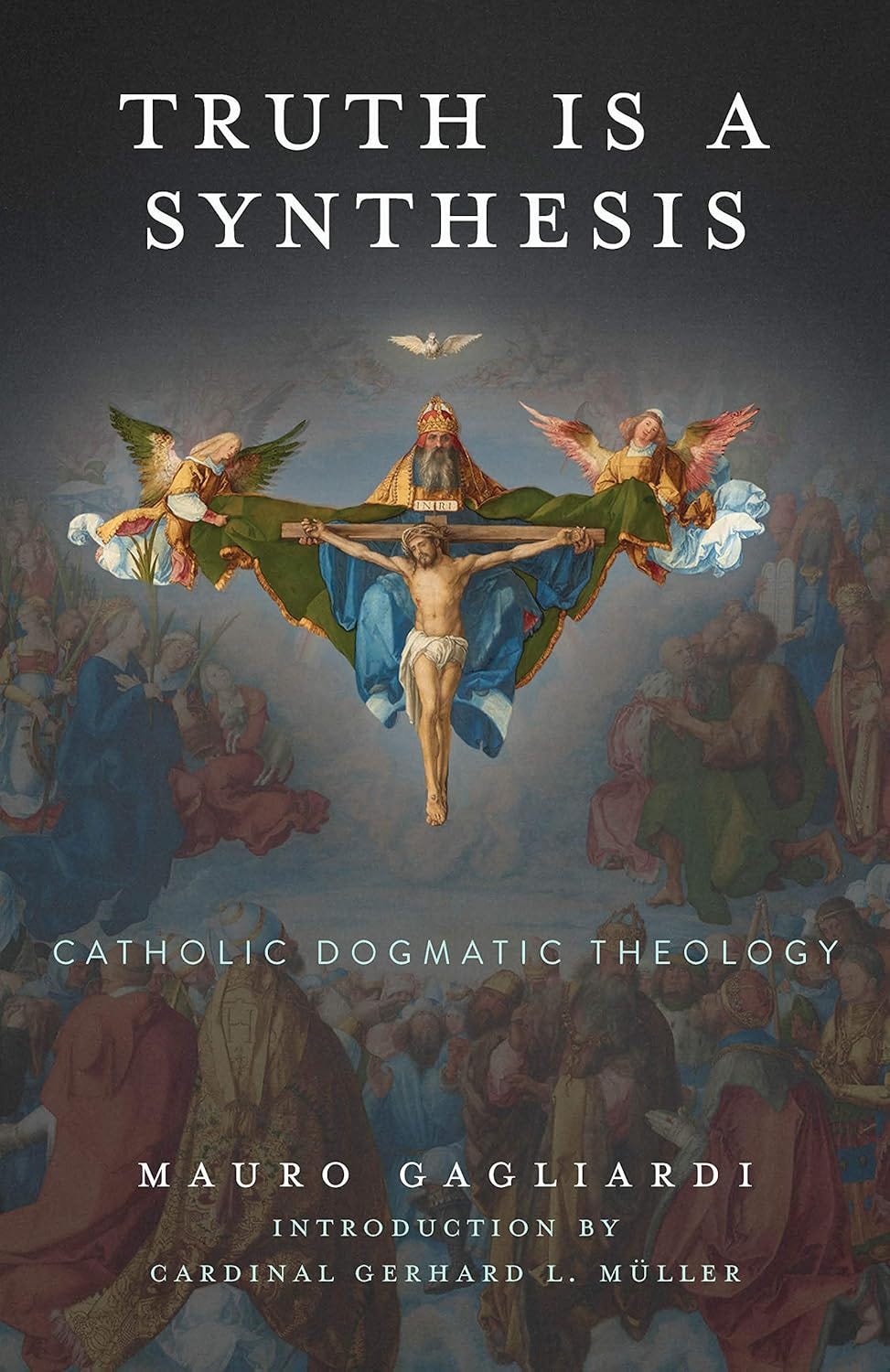
One of the basic moves of Catholic theology is “both/and.” Truth is a Synthesis, a recent work of dogmatic theology by Fr. Mauro Gagliardi, explains it this way:
…the principle of et-et (both/and)...consists of two aspects: (1) The truths of the faith are generally structured on a fundamental bipolarity of elements; (2) the two elements are in a hierarchical order. Confusion and error regarding faith and morals almost always derive from the negation or simple reduction of one or both of these aspects. (From the Introduction, p. xx)
Jesus Christ is both God and man, but He is a divine and not a human person. We use both faith and reason, but faith judges the apparent results of reason. For salvation we need both faith and works, but faith is the root and cause of our salvation, while works are a fruit that grows out of it. And so on.
“What God Has Joined Together”
The both/and is founded on the person of Christ. It’s already built into the basic Christian proclamation, “Christ is Lord.”
The first few centuries saw furious debate over what this actually meant. It seemed to involve, on the one hand, a man who lived in a particular time in place, made of the gunk of the universe, and was capable of being crucified. On the other hand, “Lord” here stands for the divine name, YHWH. The Holy Immortal One, utterly transcendent, the wick to the flame of existence.
Predictably, most of the early solutions to this puzzling equation involved compromising one or the other of the human and divine. Maybe Jesus wasn’t really God, but a kind of super-being, the top rung on the ladder of God’s works. Or maybe he wasn’t really man, but something more like an avatar or puppet for God.
The default pagan way of thinking about things human and divine was to see them as in conflict. Where the human begins, the divine must necessarily end. The Catholic Church took a radically different approach. It may seem that Jesus must be either truly God or truly man, but the folly of God is wiser than the wisdom of man. Jesus is both completely divine and completely human.
Notice the set-up: two poles, apparently mutually exclusive, come together without confusion, without change, without division. Both are fully themselves. Not only that, but they become more themselves through the synthesis. God’s power is shown perfectly through a human life. Human life is perfected when lived by God. 1
Once you’ve got the trick of the both/and, you discover that Christian doctrine is shot all through with it. Justice and mercy; body and soul; Scripture and Tradition; Old and New Testament. It is not the only thing one needs to understand the Faith, but it is one of the deep motifs that shows the quiet hand of God stitching together the Church’s creeds over centuries, millenia.
“You have arranged all things by measure and number and weight.”
The both/and emphatically does not mean that the two things are basically the same or interchangeable. The ordering matters; the priority of one is what safeguards the unique contribution of each. It is the fact that Christ is GOD that enables him to become man. That there is generally justice allows us to show mercy in a particular case. The soul governs the body, and so can direct it to its proper ends. In each case, inverting the order is either impossible or creates a nightmare.
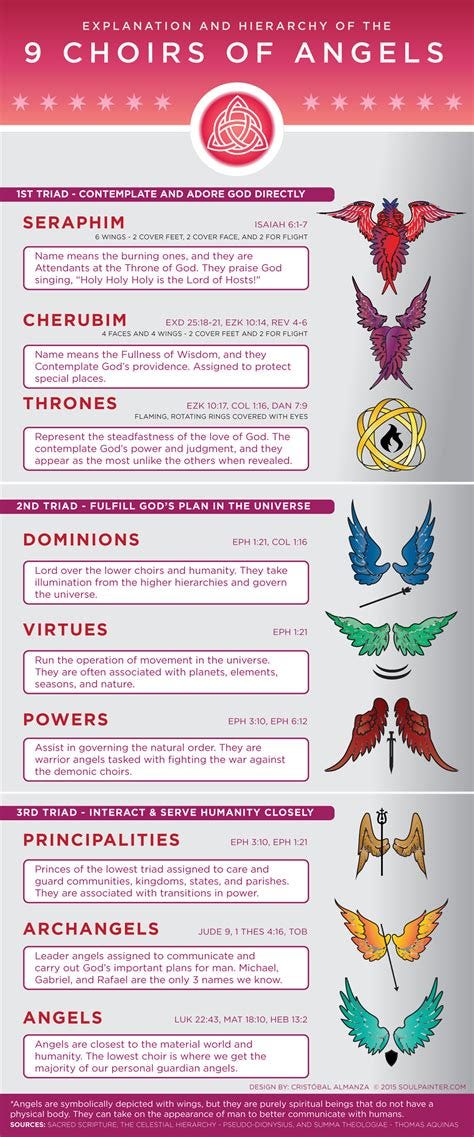
Far from suppressing one element of the synthesis, hierarchy actually enables each unique element to flourish. This shouldn’t be surprising. Traditional Christian angelology, going back to at least the fifth century, understands the angels as organized in a hierarchy of three levels, with three more levels inside each of these. Yet all angels are fully realized, superabundantly living servants of YHWH, the ones who “always see the face of my Father in heaven,” so bursting with their own perfection that they are often described as “flames of fire.” Consider this extract from the soaring climax of C.S. Lewis’ Perelandra:
And another said, “it [new creation] is loaded with justice as a tree bows down with fruit. All is righteousness and there is no equality. Not as when stones lie side by side, but as when stones support and are supported in an arch, such is His order; rule and obedience, begetting and bearing, heat glancing down, life growing up. Blessed be He!”
…
“In the plan of the Great Dance plans without number interlock, and each movement becomes in its season the breaking into flower of the whole design to which all else had been directed. Thus each is equally at the centre and none are there by being equals, but some by giving place and some by receiving it, the small things by their smallness and the great by their greatness, and all the patterns linked and looped together by the unions of a kneeling with a sceptred love. Blessed be He!”
As the rounds of praise roll on, Lewis returns over and again to the idea that absolute equality is the enemy of harmony. If all instruments and their notes were forced into uniformity, there would be noise, but no music. Melody and countermelody both make the song, but not in the same way. The angels, perfectly conformed to God’s will, are bound together in a hierarchy of love where the lower exists so that the higher may give and the higher exists so that the lower may receive; “each is equally at the centre and none are there by being equals.” The both/and is fundamentally a harmonizing principle working on the assumption that God made everything good, “looped together by the unions of a kneeling with a sceptred love.”
Lewis once said that the devil sends errors into the world in pairs, so that in combating one we fall into the other. As much as I love my spiritual father, I offer him a slight correction. It’s not so much that errors come in pairs, but rather that the truth is a synthesis, and man without grace is always trying to introduce competition where there should be harmony, setting up one side of the synthesis up against the other. We need not look far for an explanation: it is very psychologically comforting to arm yourself with a hammer and the absolute certainty that everything in the world is a nail. But we’ll miss much of what God has given us, like flowers and puppies and sapphires and other things that suffer when treated like a nail.
In the next installment, I’m going to take a brief excursus2 to talk about fiction that reflects the both/and. After that, we’ll move on to consider the either/or, which predominates in Protestant Christianity. To that end, allow me a parting observation.
“Catholic” in its Greek roots means “according to the whole.” It may also be rendered “entire,” or “universal.” The Catholic Faith has the both/and built into it at the deepest level because it is the fullness of the Body of Christ on earth, and the reign of Christ extends over all things. Many insist on calling themselves “little ‘c’ catholics,” but it is telling that throughout the Church’s long history, no challengers have ever seriously and credibly attempted to claim “catholic” as their identifying title. Two separate schisms, 500 years apart, left behind groups calling themselves “Orthodox.” Countless other movements have been called after their sect’s founder. But there is only one Catholic Church; no adjective need be added for you to know which one that is.
Previous:

Next:

Back to Building It
This footnote offers a technical clarification. I say they become “more themselves,” but I don’t mean that in a heretical way. With respect to God, obviously He is no better off for the synthesis, and remains essentially unchanged, already possessing complete perfection within Himself. On the other hand, I wouldn’t want to imply that human nature in Christ was merely perfected according to its own nature. This would be a restoration or completion of human nature, but in Christ we have more than that, we have its elevation into the very inner life of God. If you understand that theology (and human speech generally) relies on analogical ways of speaking, this shouldn’t be at all scandalous.
Now that I’ve been accepted into a Ph.D. program I get to use words like “excursus” and not explain them.
Nice one